Tankless Water Heater Service in Garnett, KS
All Seasons Air Conditioning and Heating offers comprehensive tankless water heater service for Garnett, KS homes, covering diagnostics, repairs, preventive maintenance, and expert installation considerations. Homeowners learn how timely maintenance prevents mineral buildup, error codes, and unexpected outages while significantly boosting efficiency and lifespan. Our diagnostic process emphasizes crucial safety checks, accurate code interpretation, flow verification, and thorough component inspection. We also explain common problems, reliable replacement options, our service area coverage, and what to expect from emergency support, convenient scheduling, and professional workmanship across all major brands.
.webp)
Tankless Water Heater Service in Garnett, KS
Tankless water heaters deliver on-demand hot water, higher efficiency, and a smaller footprint than traditional tanks, but they still need timely diagnostics, skilled repairs, and regular maintenance to perform reliably in Garnett, KS homes. Whether you have an older unit showing error codes or you are considering an upgrade for better winter performance, this page explains the full range of tankless water heater services commonly required in east-central Kansas, what to expect from each service, and practical guidance to make an informed decision.
Why timely tankless water heater service matters in Garnett, KS
Garnett experiences cold winters and seasonal water-quality variations that can accelerate scale buildup and stress components. Left unchecked, these factors lead to reduced flow, fluctuating temperatures (cold water sandwich), diminished efficiency, and unplanned outages. Professional service restores reliability, extends equipment life, and helps maintain expected operating efficiency during peak heating months.
Common tankless water heater problems in Garnett homes
- No hot water or intermittent hot water - often related to ignition, flame sensors, gas supply, or flow sensors.
- Low flow or sudden temperature drops - usually caused by mineral scaling on heat exchangers or clogged filters.
- Error codes and lockouts - electrical, gas, venting, or internal sensor faults.
- Strange noises - indicating scale, sediment, or failing components.
- Vent or combustion issues - improper venting can trigger safety lockouts and reduce performance.
- Pressure and temperature fluctuations - related to recirculation systems, pressure regulators, or plumbing changes.
Diagnostic process - what professionals check
A structured diagnostic approach isolates the root cause quickly and avoids unnecessary part replacement:
Repairs and component replacements
Common repairs include replacing igniters, flame sensors, flow sensors, thermostats, and circulation pumps. When scaling has compromised the heat exchanger or when recurring faults make repair uneconomical, full replacement of the unit or major components may be advised. Repair decisions are based on unit age, cost of parts, and long-term reliability expectations.
Installation and replacement options
Replacing an older tankless unit or installing a new system requires more than swapping equipment:
- Proper sizing for peak flow and simultaneous fixture usage ensures consistent hot water delivery.
- Fuel type considerations - natural gas, propane, or high-capacity electric models have different venting, gas-line, and electrical requirements.
- Venting and combustion clearances must meet local code and manufacturer guidelines.
- Upgrading gas line size, electrical service, or adding a dedicated water-softening solution may be recommended for optimal performance.Quality installations optimize longevity and ensure full manufacturer performance.
Preventative maintenance - keep units running efficiently
Regular maintenance is essential to avoid breakdowns and to preserve efficiency:
- Annual or semi-annual descaling (depending on water hardness) to remove mineral buildup from the heat exchanger.
- Cleaning or replacing inlet screens and filters.
- Inspecting venting and combustion systems for obstructions or deterioration.
- Checking sensors, burners, and electrical connections for wear.A scheduled maintenance plan reduces emergency calls and helps maintain manufacturer warranties.
Emergency service options
Some issues require immediate attention, especially in winter or when a complete loss of hot water affects health and safety. Emergency service typically focuses on temporary restoration of hot water and diagnosis for a reliable long-term repair. Rapid response is important in cold weather to prevent frozen pipes and other winter-related damage.
Service area and typical response times
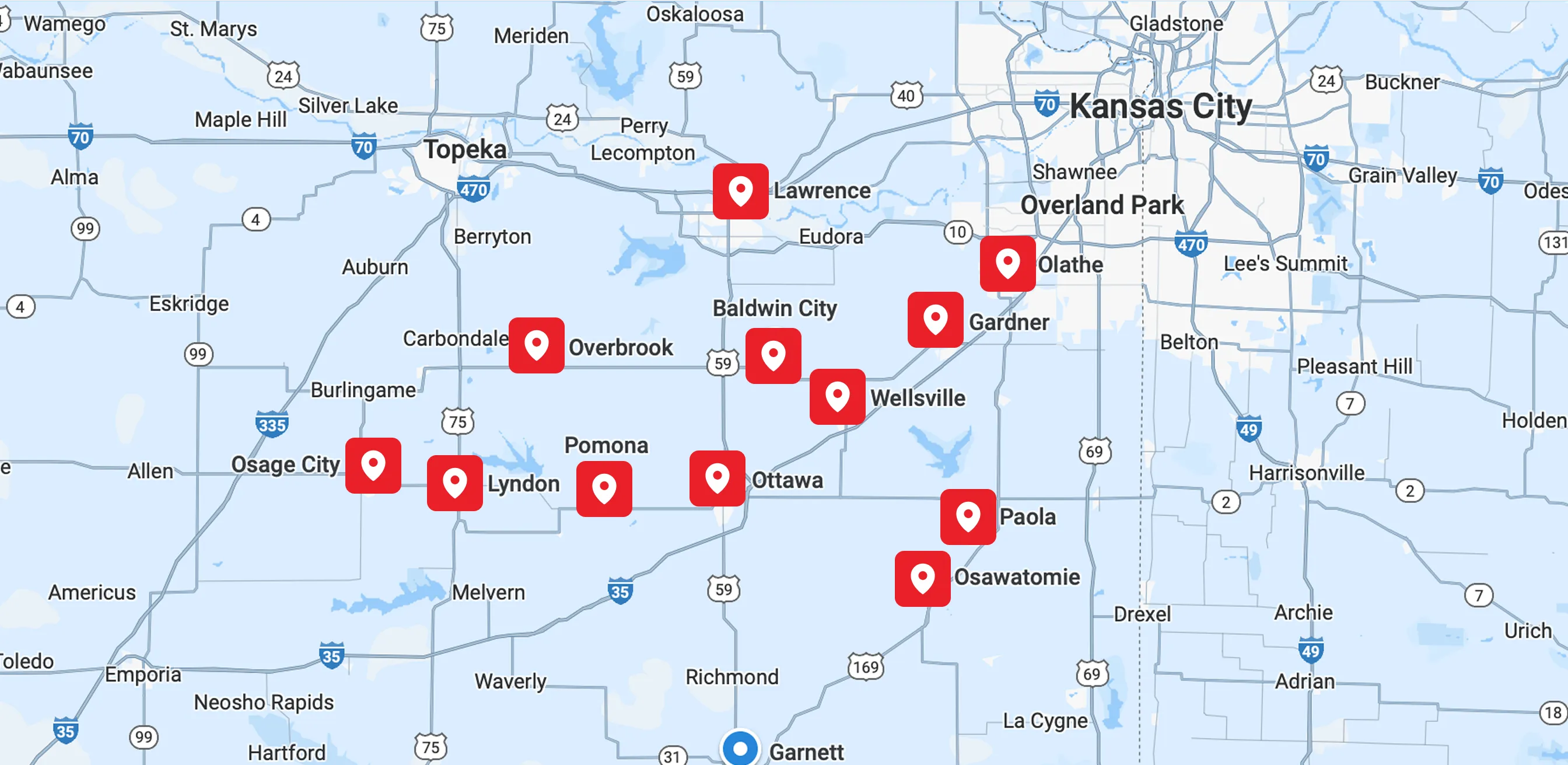
Coverage centers on Garnett and surrounding Anderson County communities, including nearby rural areas. Response times vary by season and local demand; during moderate conditions, same-day or next-day service is common, while winter spikes in calls may extend response windows. Availability for emergency diagnostics is prioritized when safety or frozen-pipe risk is present.
Brand experience and supported equipment
Technicians experienced with major tankless brands can service most residential systems:
- Rinnai
- Navien
- Bosch
- Noritz
- Rheem
- Takagi
- Other common OEMs and aftermarket componentsFamiliarity with multiple manufacturers helps ensure accurate interpretation of error codes and correct replacement parts.
Frequently asked questions (FAQs)
Q: How long does a tankless water heater last?
A: Typical lifespan is 15-20 years with proper maintenance; heat exchanger condition and water quality are key factors.
Q: Why does my tankless unit produce lukewarm water when multiple fixtures run?
A: The unit may be undersized for simultaneous demand, or flow sensors and burners may be limiting output. A sizing review or repair can resolve this.
Q: What is scaling and how often should descaling be done?
A: Scaling is mineral buildup from hard water that reduces heat transfer. Descaling frequency depends on local water hardness; many Garnett homes benefit from annual or semi-annual maintenance.
Q: Do I need a water softener with a tankless heater?
A: A softener or point-of-use treatment can greatly extend exchanger life in areas with hard water. Consider water testing to determine the need.
Q: Are permits required for replacement or new installation?
A: Permit requirements vary by jurisdiction; installations must comply with local building codes and manufacturer installation instructions.
Q: Can a tankless unit be converted from natural gas to propane?
A: Some models are convertible, but conversion must follow manufacturer procedures and local code, including burner adjustment and gas-line sizing.
How to prepare before scheduling service
To streamline diagnostics and make visits more effective, have the following information ready:
- Unit make, model, and approximate age (often on a label).
- Description of symptoms and any error codes displayed.
- Typical household hot water usage patterns and any recent plumbing changes.
- Access to the unit and any known water-quality concerns.Providing clear details helps pinpoint probable causes and shortens time to repair.
Final notes on benefits and maintenance
A properly serviced tankless water heater delivers consistent hot water, better energy efficiency, and a longer operating life—advantages that are particularly valuable in Garnett’s seasonal climate. Regular diagnostics, timely repairs, and a preventive maintenance schedule tailored to local water conditions are the most effective ways to protect your investment and avoid unexpected cold-weather failures.
Customer Testimonials
Service Areas